

A steaming bowl of homemade soup is an ideal meal in the depths of winter. And if you are going to the trouble of making your own soup, then you really want to make sure you know how to freeze homemade soup properly to ensure you always have a meal in the freezer. So let’s dive in.
* We are a participant in the Amazon Services LLC Associates Program, an affiliate advertising program designed to provide a means for us to earn fees by linking to Amazon.com and affiliated sites.
Hot homemade soup. There is just something about those words that conjure up a whole bowl of comfort for me. Whether it be a big bowl of cheesy cauliflower soup, a hearty bowl of vegetable soup or a super quick minestrone soup, soup would have to be my favourite winter meal. We eat homemade soup for dinner at least once a week in winter, and I always double the recipe so I either have leftovers for lunch the next day or so I can freeze the excess soup for another meal.
Whilst freezing soup seems straightforward (and it is) I have a few tips on how to freeze soup properly that will not only ensure your soup is as delicious the second time around, but that will also maximise the time you can store the soup in the freezer without affecting the taste and texture. I have summarised these tips in a handy guide for you that you can grab from my Resource Library. Simply click the link below or request the password at the end of the post. Or read on for the full version.

What Soups Can You Freeze?
Most homemade soups freeze extremely well. There are a few exceptions (outlined in the section below), but generally the best soups to freeze fall into the following five categories:
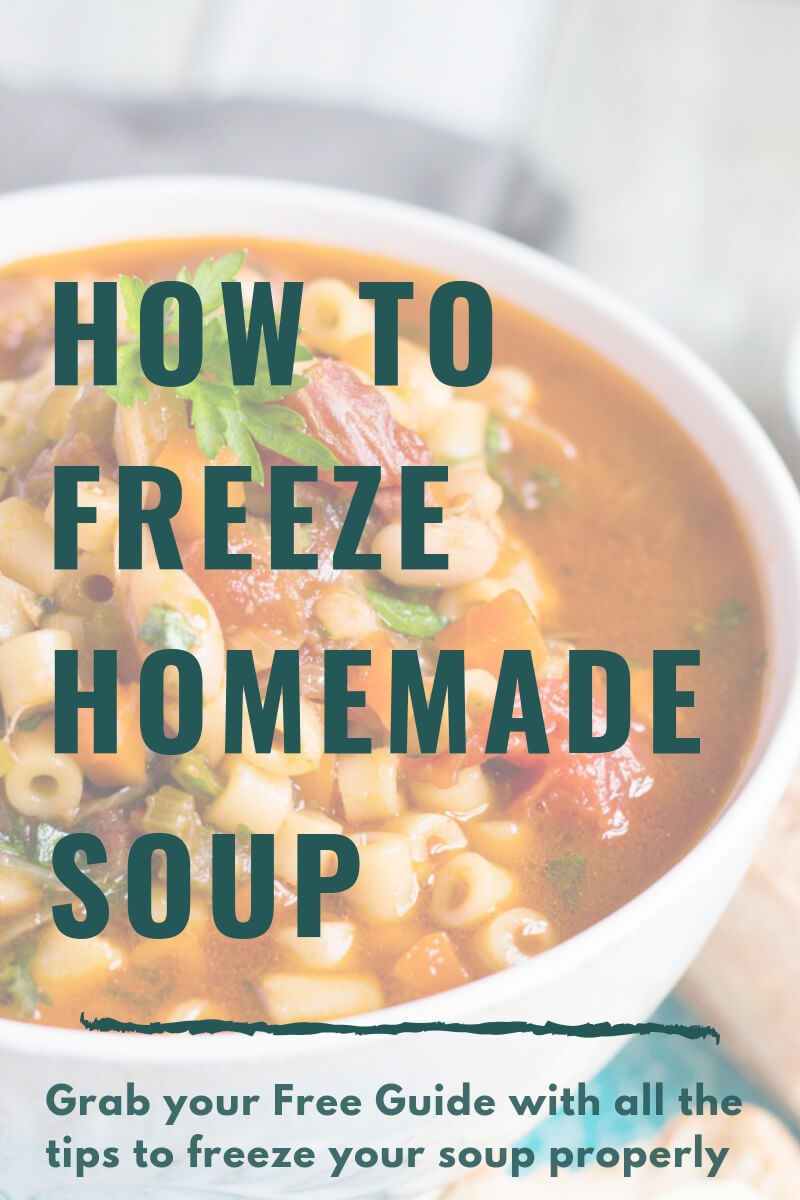
- Bean & Lentil Soups: Hearty soups make with beans and lentils freeze extremely well, and are my favourite type of soup to freeze. Think a thick pea & ham soup, or my hearty red lentil & bacon soup. Soups with beans and lentils tend to thicken on standing, and may require a little extra liquid when reheating (see below).
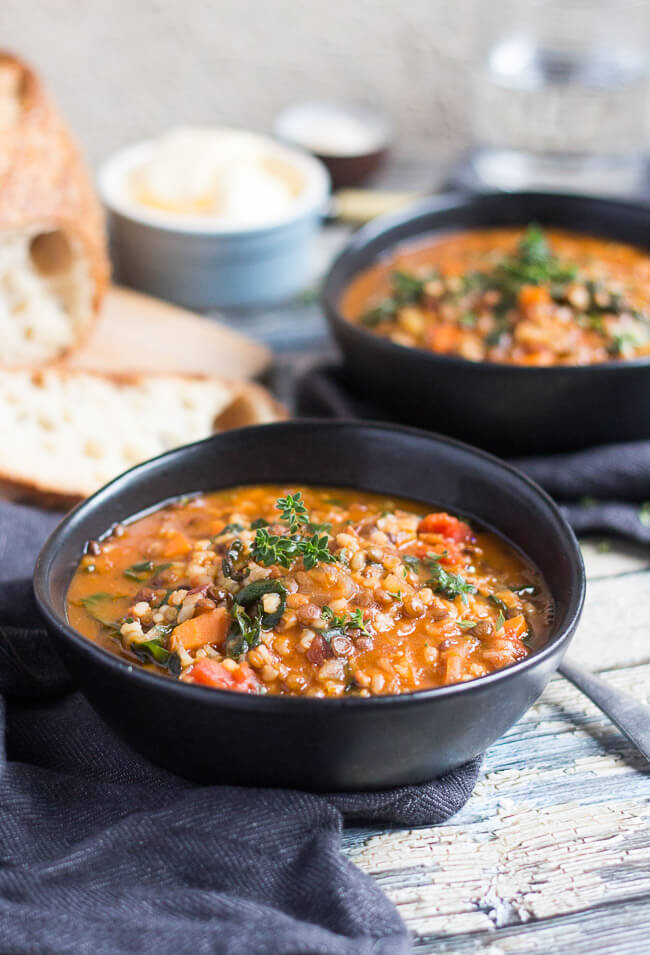
- Rice Based Soups: All rice based soups freeze well, although wholegrain rice (think brown, black & wild rice – which I know is not a rice but it fits here) will retain more structure in the freezing process than white rice. Rice based soups, like my hearty lentil and brown rice soup, also thicken on standing so may require a little extra liquid when reheating (see below).
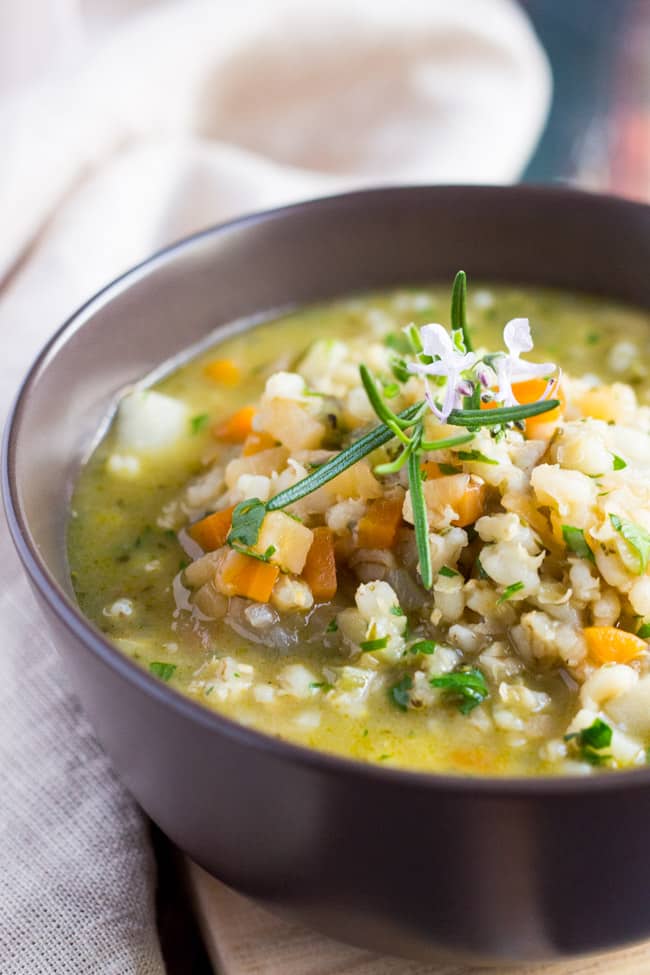
- Stock or Broth-Based (Clear) Soups: Clear soups made with stock or broth freeze particularly well as there is no concern that the freezing process will cause the soup to separate or change texture. If the soup recipe contains noodles, omit these when freezing the soup and just make a note on the label to add them back in when reheating or serving your soup.
- Meat Based Soups: Meaty soups and soupy chili freeze very well, and are ideal as stand alone meals.
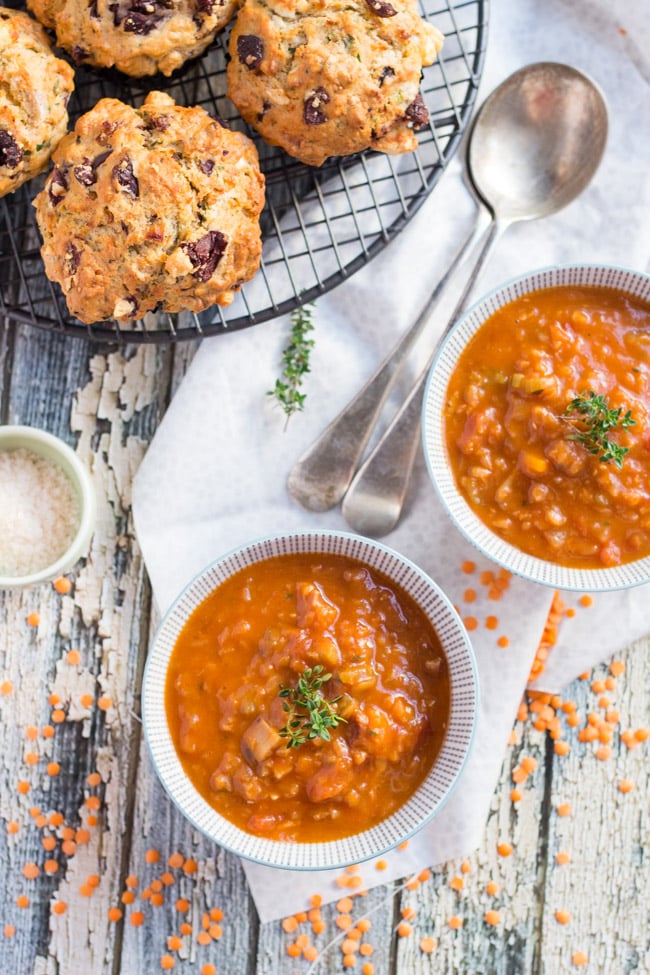
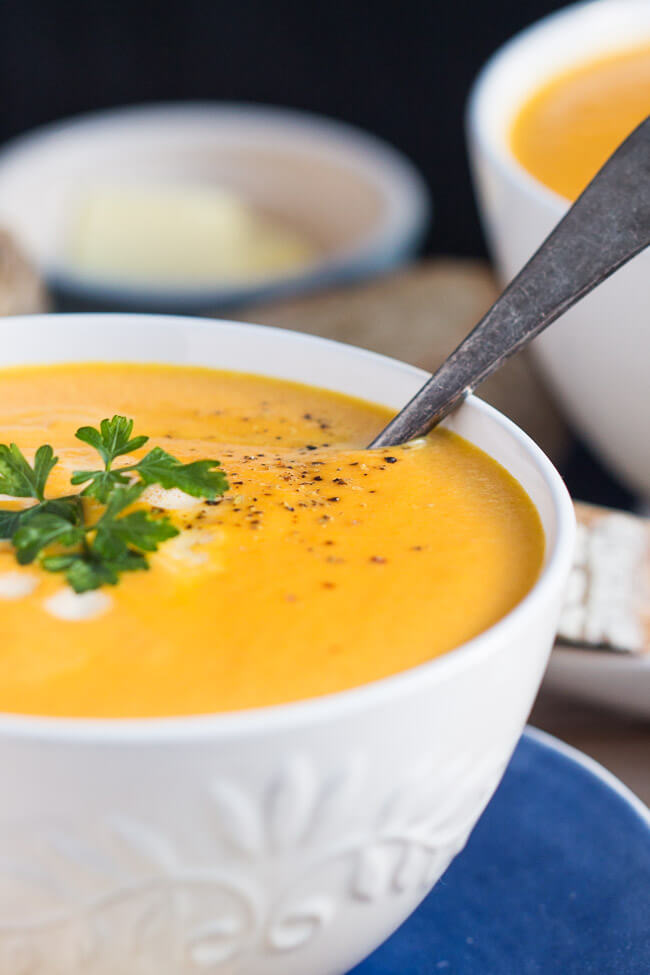
- Pureed or Blended Soups: So long as they don’t contain a lot of dairy products such as cream or milk, pureed and blended vegetable soups freeze very well. I prefer to freeze my pureed soups, like my creamy carrot soup, without cream in it. I simply make a note on the label to add the cream as I reheat the soup.
What Soups Don’t Freeze Well?
There are a few types of soups that really don’t freeze well. Try these at your own risk:
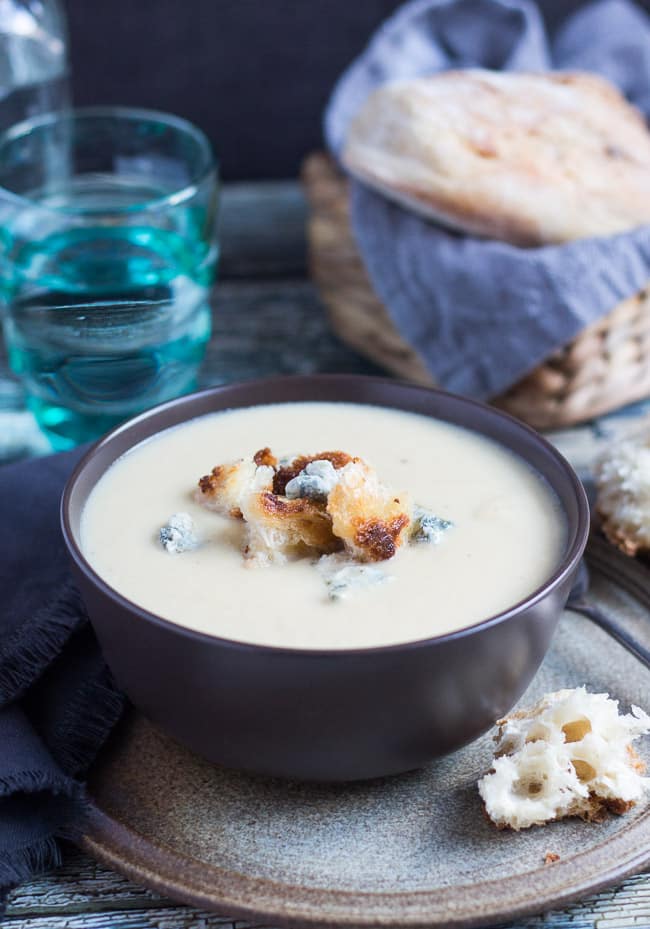
- Soups that contain a lot of dairy (think chowders and bisques). These have a tendency to become grainy and separate when thawed. Some dairy based soups may be rescued with a good blitz of a stick blender (see below for more information).
- Soups that contain large chunks of potato. The pieces of potato change texture in the freezer, and become mealy and unpleasant to eat. Interestingly though, soups that contain pureed potato freeze quite well.
- Seafood soups. These tend to smell slightly “off” when thawed. If you wish to freeze seafood soup try freezing the soup base and poaching any fresh seafood in the warmed base when reheating, rather than freezing the soup with chunks of seafood in it.
- Soups thickened with eggs or cornflour. These tend to become watery and separate when defrosted. Don’t even try to freeze these types of soups. You will be disappointed.
What Is The Best Packaging For Freezing Soup?
The type of packaging you select to freeze your homemade soup in will depend on how much available freezer space you have, and whether you have children that are likely to smash glass containers on the floor when they are reaching for something else in the freezer (Just me?).
I freeze my soup in two different sized containers: individual portions suitable for single lunches and meal sized portions perfect for an easy family dinner.
The following packaging is all suitable for freezing soup:
- Freezer safe zip lock bags. These are ideal when you have limited space. Once frozen, the bags can be stacked together.
- Freezer safe plastic containers with lids.
- Glass jars with lids, such as Mason jars.
- Freezer safe glass containers with lids.
Ensure that any packaging you use is rated for freezer use. If your packaging is not suitable for use in the freezer it could break as the soups freezes, leaving you with a soup lined freezer cavity.
Best Equipment To Freeze Soup
You do not need any specialist equipment for freezing soup, but having the right equipment will save you a lot of frustration if you plan to freeze soup on a regular basis. I use and recommend the following:
- Ladle: A small-ish ladle is the easiest way to portion soup into containers with minimal mess.
- Canning funnel (optional): This can be useful for filling zip lock bags.
- Freezer safe containers: See above
- Labels: All frozen food looks the same. It’s a freak of science. Make sure you label your soup before it goes into the freezer with the date, type of soup and any special reheating instructions. A roll of masking tape and a black Sharpie are your friends here.
- Rimmed baking sheet: A rimmed baking sheet that will fit into your freezer is perfect for preventing spills from burst zip lock bags or overfilled containers.
How To Freeze Soup
The most important tip I can give you when it comes to freezing soup is:
Don’t Overfill Your Containers
You may think that you can squeeze that little bit of extra liquid into your container or zip lock bag, but keep in mind that liquid expands as it freezes. If you don’t want frozen soup all over your freezer, err on the side of caution when filling your containers.
To freeze your soup successfully, simply follow these easy steps:
- Cool the soup: I always let my soup cool slightly before filling containers. Piping hot soup can warp plastic containers and zip lock bags, and cause glass containers to crack. I usually just sit the soup pot at room temperature for about 30 minutes or so whilst we eat dinner. If you need to cool the soup quickly however, place your pot in an ice bath in the sink and stir until the soup has cooled.
- Fill the containers: The method used will differs according to whether you are filling rigid containers or zip lock bags.
- For plastic & glass containers and glass jars: Ladle the cooled soup into your preferred containers. Leave about 2 -3cm (1”) room between the top of the soup and the lid. This allows room for the soup to expand as it freezes. Place the lids on your containers or jars.
- For freezer safe zip lock bags: The easiest way to fill zip lock bags is to sit the empty bag in a narrow jug or container. Fold the top of the bag over the jug to anchor it in place. Ladle the soup into the bags – a canning funnel may prove useful here. Don’t overfill the bags. Press as much air out of the bags as possible and seal well.
- Label the containers and bags: Note the date, the type of soup, any specific reheating requirements, any ingredients to be added whilst reheating, and any toppings to be served with the soup. If using zip lock bags, you may find it easier to label the bags before filling them.
- Cool the filled containers: Do not place hot soup straight into the freezer. Depending on the size of your freezer, the heat from the soup can defrost other food and impair the function of your freezer. I like to cool my filled containers completely in the fridge before transferring them to the freezer. If using zip lock bags, lay the filled bags on a rimmed baking sheet in the fridge. This will make them easier to transfer to the freezer once cooled. Don’t pile the bags too high though (I recommend no more than 3 high) as too much combined weight from the bags can cause the bottom bags to burst open.
- Transfer the containers to the freezer: Once cooled, the containers and zip lock bags can be transferred to the freezer. I recommend that you use a baking sheet for freezing zip lock bags so the bags freeze flat and don’t wrap themselves around the bars of the freezer (It happens …. ask me how I know.). Once frozen, the baking sheet can be removed and the bags of soup stacked for easy access.
Homemade soup will last for up to 3 days in the fridge or up to 3 months in the freezer if packaged correctly.
How To Defrost & Reheat Frozen Soup
If possible (i.e. if you’ve planned ahead) defrost your soup in the fridge overnight. I recommend you place your frozen soup container or zip lock bag on a plate to collect any moisture that drips off the outside as the soup defrosts. I will be honest here and say that I usually forget to take my soup out of the freezer the night before, so I normally allow my soup to defrost slightly on the bench for a few hours prior to lunch or dinner before reheating it.
Soup can also be defrosted in the microwave. Follow the instructions provided by the manufacturer for your model for the best results.
If you have frozen soup in zip lock bags, these will defrost very quickly if slipped into a sink of warm water.
The easiest way to reheat frozen soup is to place the defrosted soup in a saucepan over a medium heat. The soup does not need to be completely defrosted at this stage. Just keep the heat low and stir frequently until the soup melts and is warmed through. Stir frequently whilst the soup is heating to prevent it sticking to the bottom of the saucepan and burning.
Soup can be reheated in the microwave in a suitable microwave-safe container.
And a word of caution here: soups made with pasta, beans, grains or lentils, will thicken when frozen. Add a little extra water or homemade stock to these soups when reheating to thin out the texture and turn them back into soups.
Making your own #homemade #soup? Grab my free #cheatsheet full of tips & tricks for #freezing soup properly to ensure you always have a meal in the #freezer. #freezermeals Click To TweetFreezing Tips For Different Types Of Soups
Soups Made with Cream or Milk:
Soups made with a large amount of milk or cream can have a grainy texture and appear to separate when defrosted and reheated.
There are two ways you can deal with this:
- Omit the dairy products from the soup when freezing, make a note on the label as to the quantities required and add the dairy in when reheating the soup.
- Freeze the soup with the dairy products. If the soup separates on defrosting, quickly blitz the soup in a blender or with a hand held blender to even out the texture just before serving.
Soups Made with Pasta & Noodles:
Soups that contain pasta or noodles (like my speedy minestrone) can be frozen, but the pasta does turn quite soft in the freezer. If I am freezing small quantities for my lunch, this honestly doesn’t bother me. However, if you are freezing larger quantities of soup for a main meal, consider omitting the pasta or noodles from the recipe and adding freshly cooked pasta or noodles to the reheated soup base just before serving.
Chunky Vegetable Soups:
Perfectly cooked vegetables in a chunky vegetable soup can soften in the freezer, which will change the texture of the reheated soup. If making a soup with the intention of freezing it, consider slightly under cooking the vegetables in the soup before portioning it into containers.
And if you’ve doubled the recipe with the intention of eating half now and freezing the remainder, scoop out the portion of the soup you plan to freeze before the vegetables are done then continue cooking the remainder of the soup until the vegetables are tender. Package up the partially cooked portion once it is cool.
What about the Toppings & Garnishes?
Many soup recipes include toppings or garnishes to finish of the soup and add a little burst of flavour. With the exception of pesto sauce, toppings and garnishes are better off prepared fresh and added just prior to serving. Make sure you note any garnishes or toppings required for the recipe on the soup label prior to freezing.
Pesto can be frozen in ice cube trays and either defrosted at the same time as the soup, or frozen cubes can be dropped straight into piping hot soup. The heat of the soup will defrost the pesto cubes.
Frequently Asked Questions About Freezing Soup
Can you freeze soup after 3 days in the fridge? So long as your soup has remained cold, and not experienced large temperature fluctuations, leftover soup can be frozen after spending up to three days in the fridge.
Does potato soup freeze well? Soups that contain chunks of potato do not freeze well as the potato pieces change texture. Soups made with pureed potato do freeze well. If they separate on defrosting and reheating, simply give the soup a blitz with a hand held stick blender before serving.
Can I freeze homemade soup? With just a few exceptions (see above) most homemade soups are perfect for freezing.
How long can you freeze homemade soups? Most soups can be frozen for up to three – four months without any deterioration in flavour.
Can you freeze soup with cream in it? You can freeze soup containing cream (see above).
Can you refreeze soup that was already frozen? If the soup was defrosted in the fridge, then you could refreeze it. The biggest issue with refreezing is the effect this will have on the texture of the soup. If the soup was defrosted on the bench top, do not refreeze it. Either eat it or discard it.
Soup Recipes For Freezing
All of my soup recipes freeze well. I have done all the testing for you, so you can freeze any of my recipes here with confidence. Want to get started now? Then I recommend you try:
30 Minute Easy Minestrone Soup
Vegan Hearty Winter Vegetable Soup
Enjoy!
Have you got any great tips for freezing soup?
Tell me about them in the comments below.
Leave a Reply